Multi-Robot Collaboration
No single robot design is optimal for every part of a task. A cable robot can cover a large workspace but lacks fine dexterity. A robotic arm is precise but immobile. A humanoid can navigate human-scale environments. A drone can fly into spaces nothing else can reach. The idea behind heterogeneous multi-robot systems is to leverage the complementary strengths of each platform — combining them into a single collaborative system that is more capable than the sum of its parts, under shared autonomy and coordinated control.
Each platform plays a distinct role
Cable Robot
Covers large workspaces that no fixed arm can reach. Responsible for high-level transport — moving payloads or other robots across the full operational area.
Large-space transport
Robotic Arms (multi-arm)
Mounted on or deployed near the cable robot, these handle fine dexterous manipulation in small local areas — tasks that require precision beyond what a cable system can provide.
Dexterous local manipulation
Humanoid / Mobile Bimanual Robot
Operates in the interface zone between robot and human — environments designed for people. Can handle tasks that require human-scale reach, upright posture, or social proximity.
Human-scale environments
Drone / Small Mobile Robot
Flies or navigates into narrow spaces unreachable by larger platforms. Provides additional viewpoints for perception, inspection, or situational awareness across the whole system.
Narrow access · extra perception
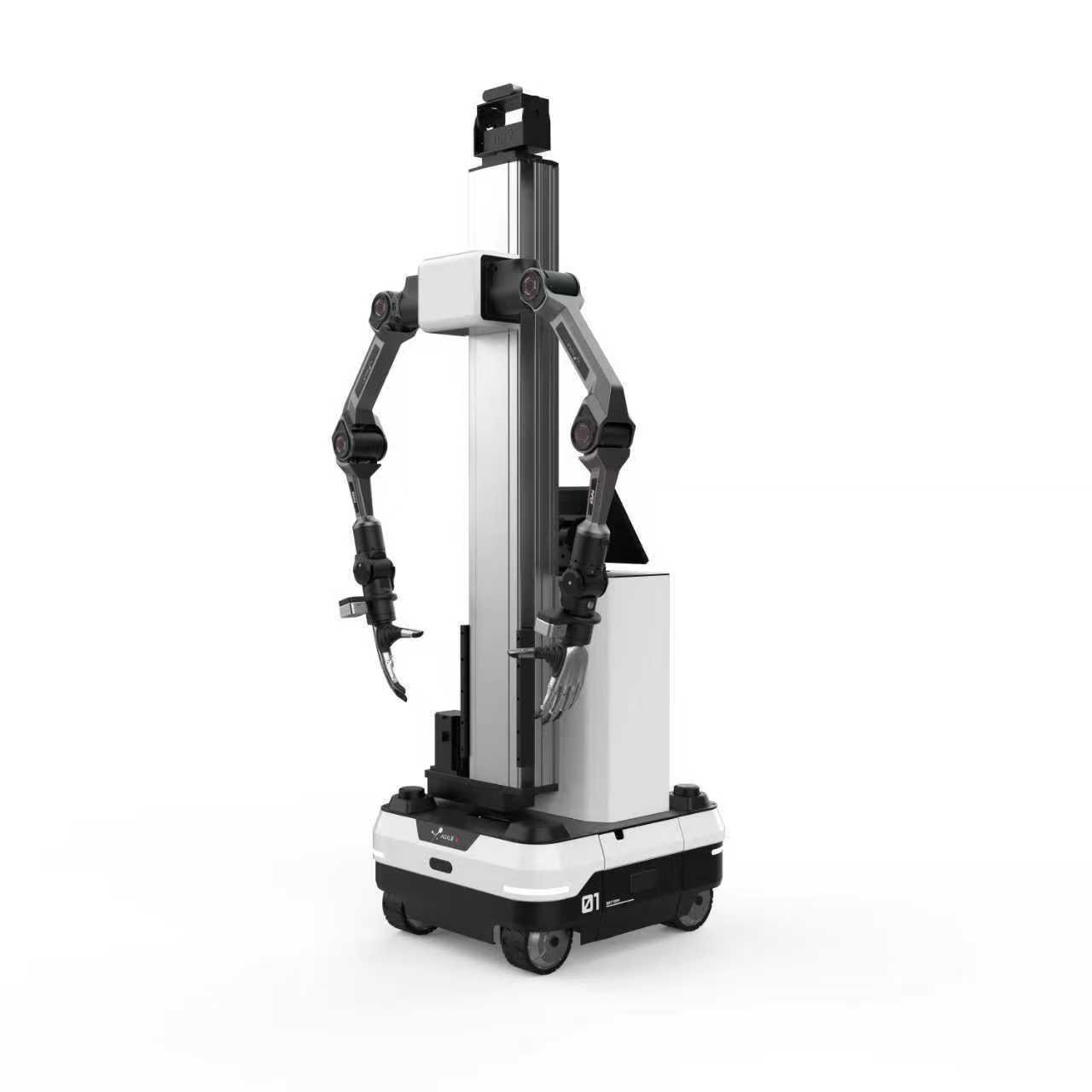
A mobile bimanual platform — operating at the intersection of human-scale reach and robotic precision.